Rice is deeply woven into China’s culture, and visiting the rice terraces is truly unforgettable. We take a train from Kunming down south, close to the Vietnamese border, and then another two hours by taxi (€36) up into the mountains (1,600 m). After the modern cities, this is a completely different side of China. The streets are narrow, the houses simple and often half-finished, people work in the fields, and meat at the markets is just laid out on the tables. Sure, they have electricity, mobile phones, and cars—but apart from that, it feels like time has stopped.
But every house has these heavy, beautiful wooden doors.
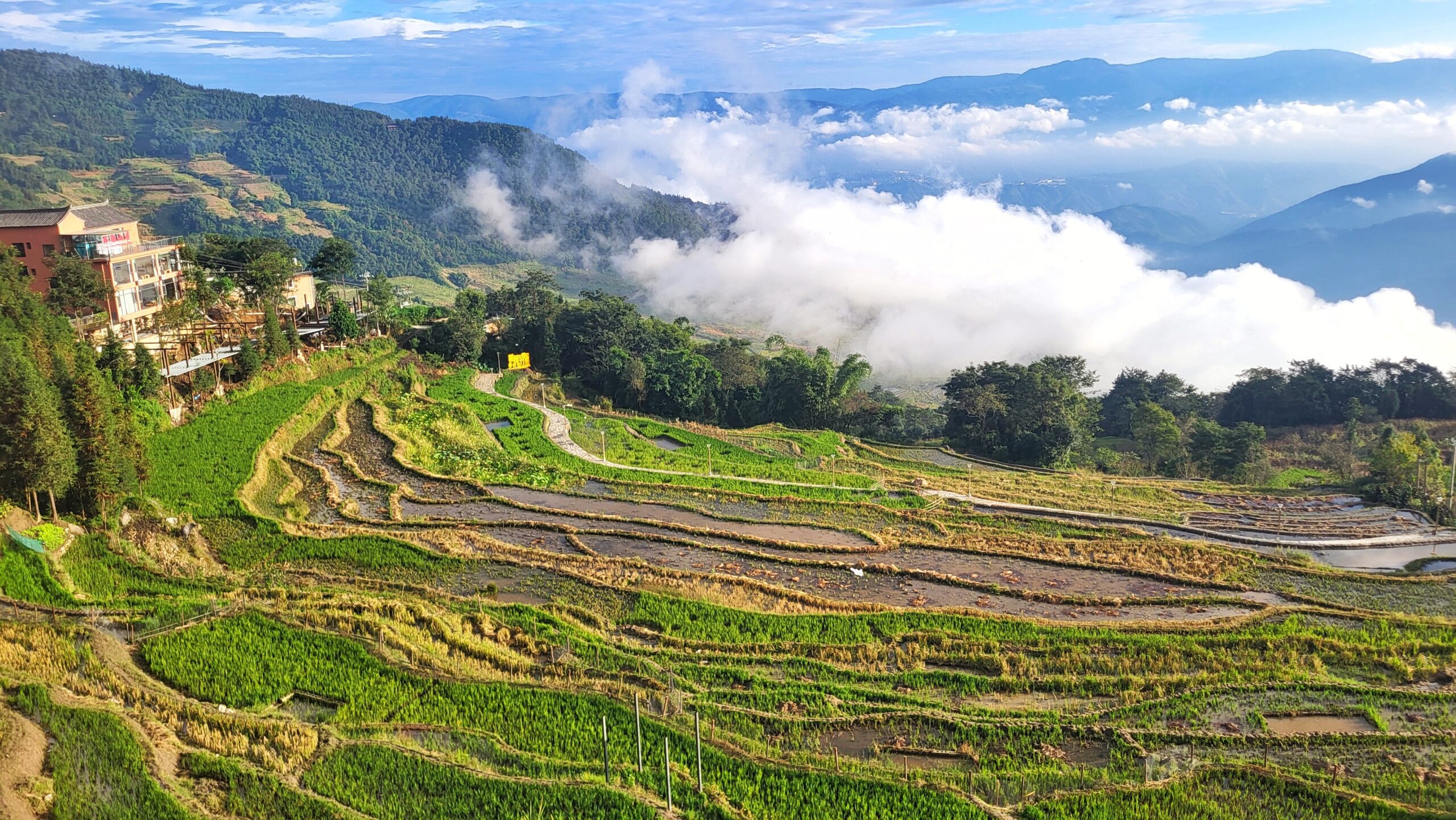
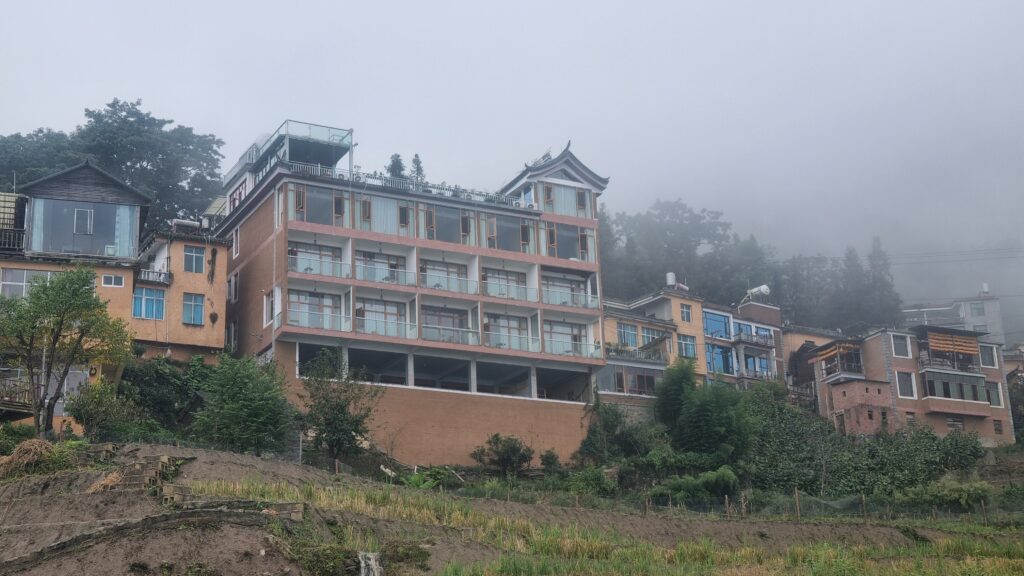
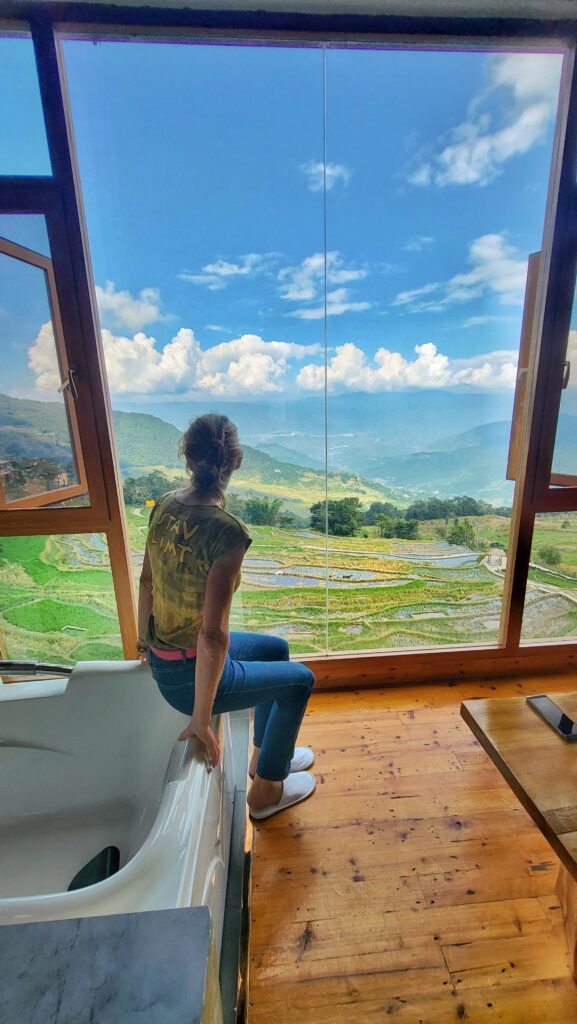
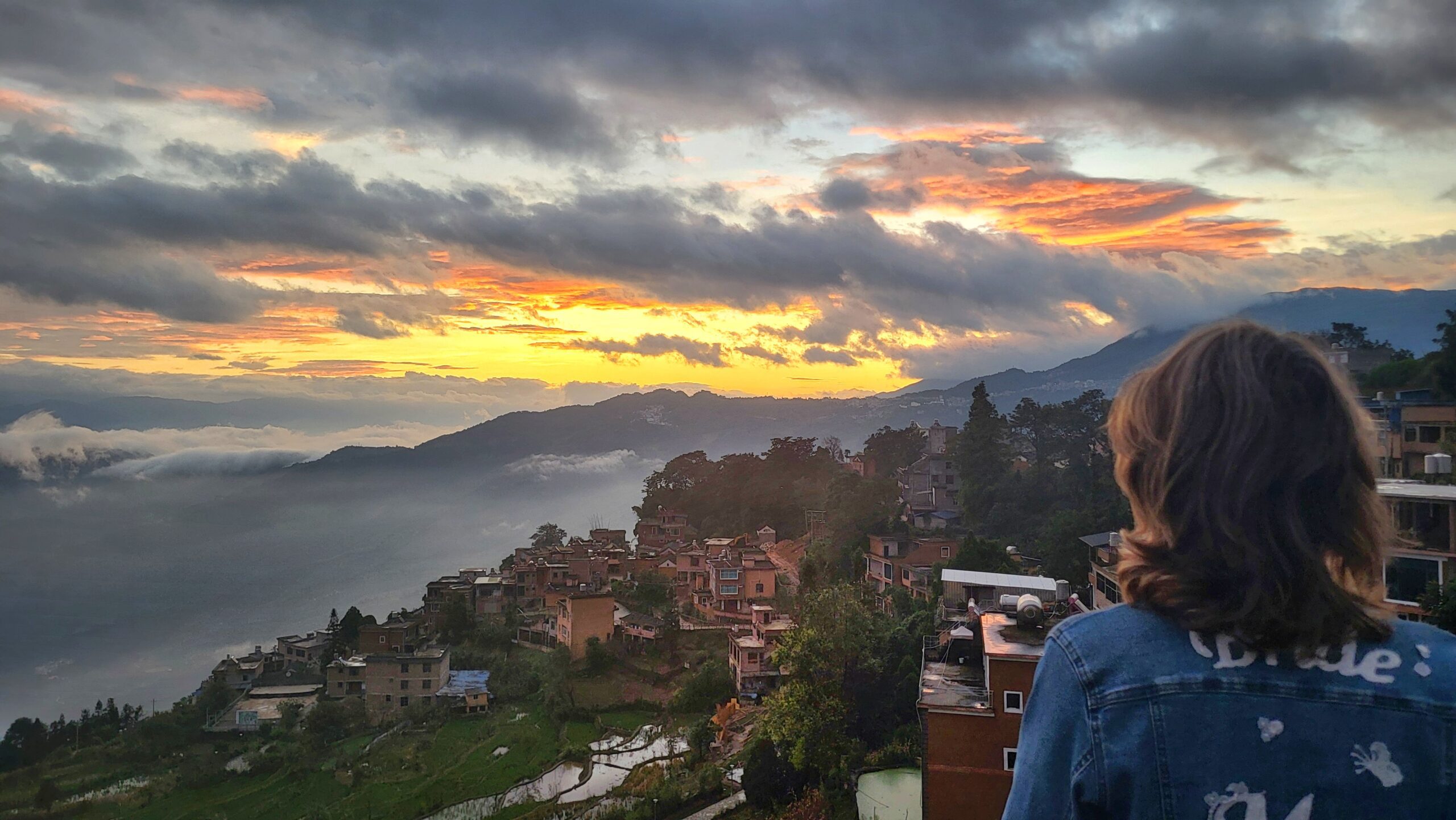
All the more surprising: our room in the little village hotel, right in the middle of the rice fields. In 2013, the Hani–Honghe Rice Terraces became a UNESCO World Heritage Site, and you can tell that tourism has slowly arrived here. Luckily there are still plenty of farmers working the fields.
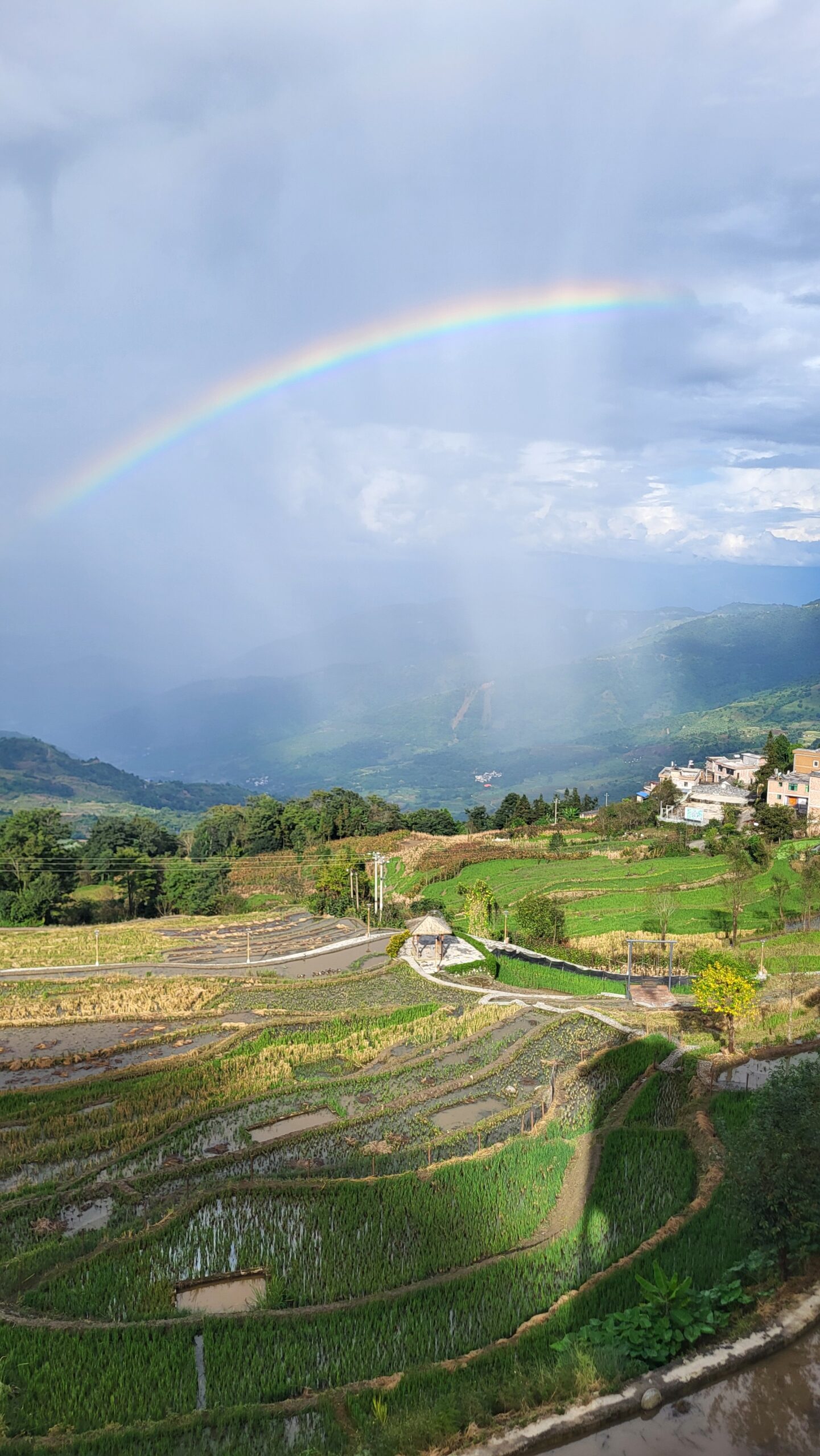

Over 1.000 years in the making
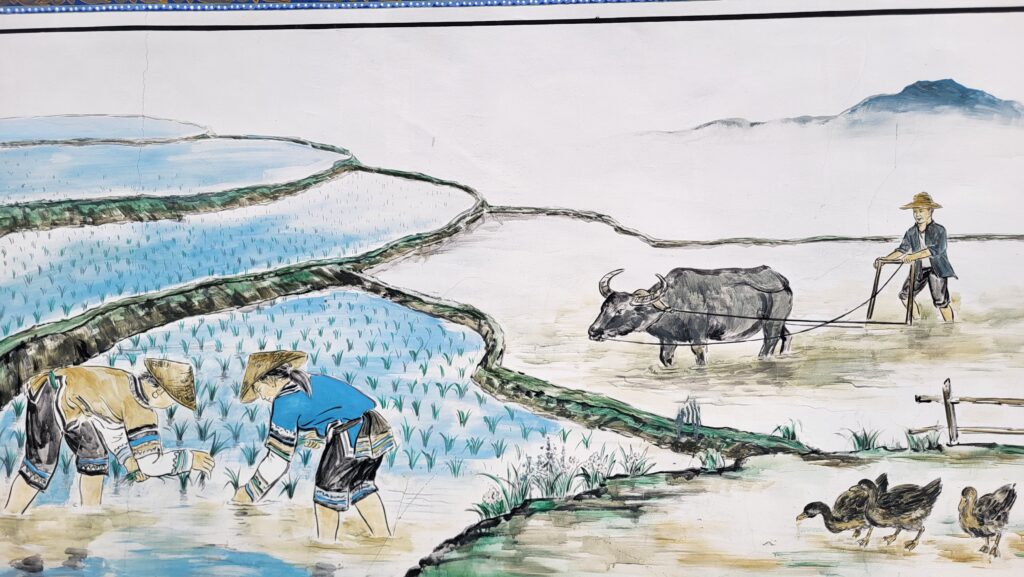
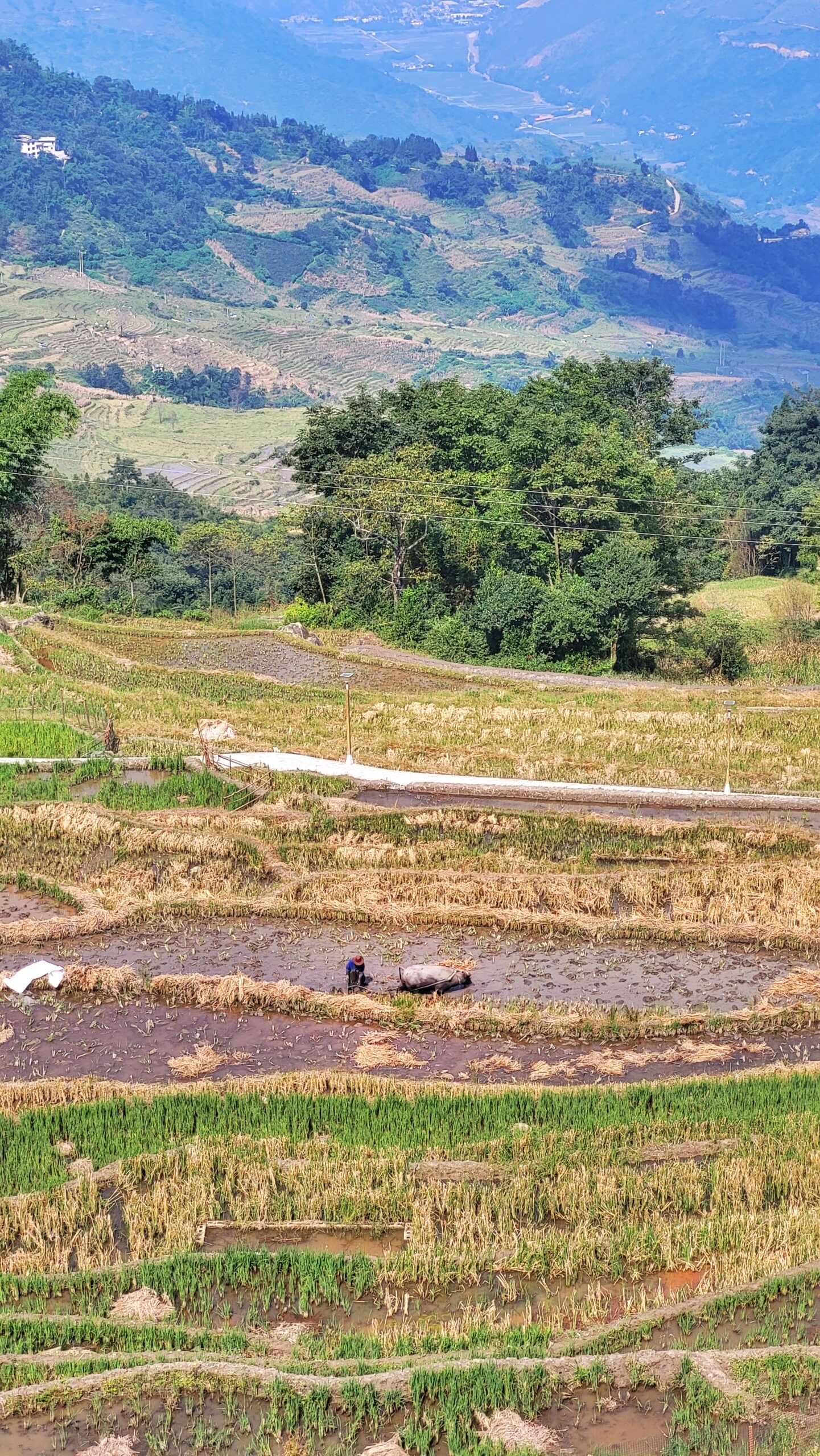
The terraces are something truly special. For more than a 1.300 years, the Hani people have been building them step by step, and even today the fields are ploughed with water buffalo.


Chicken feet and duck head
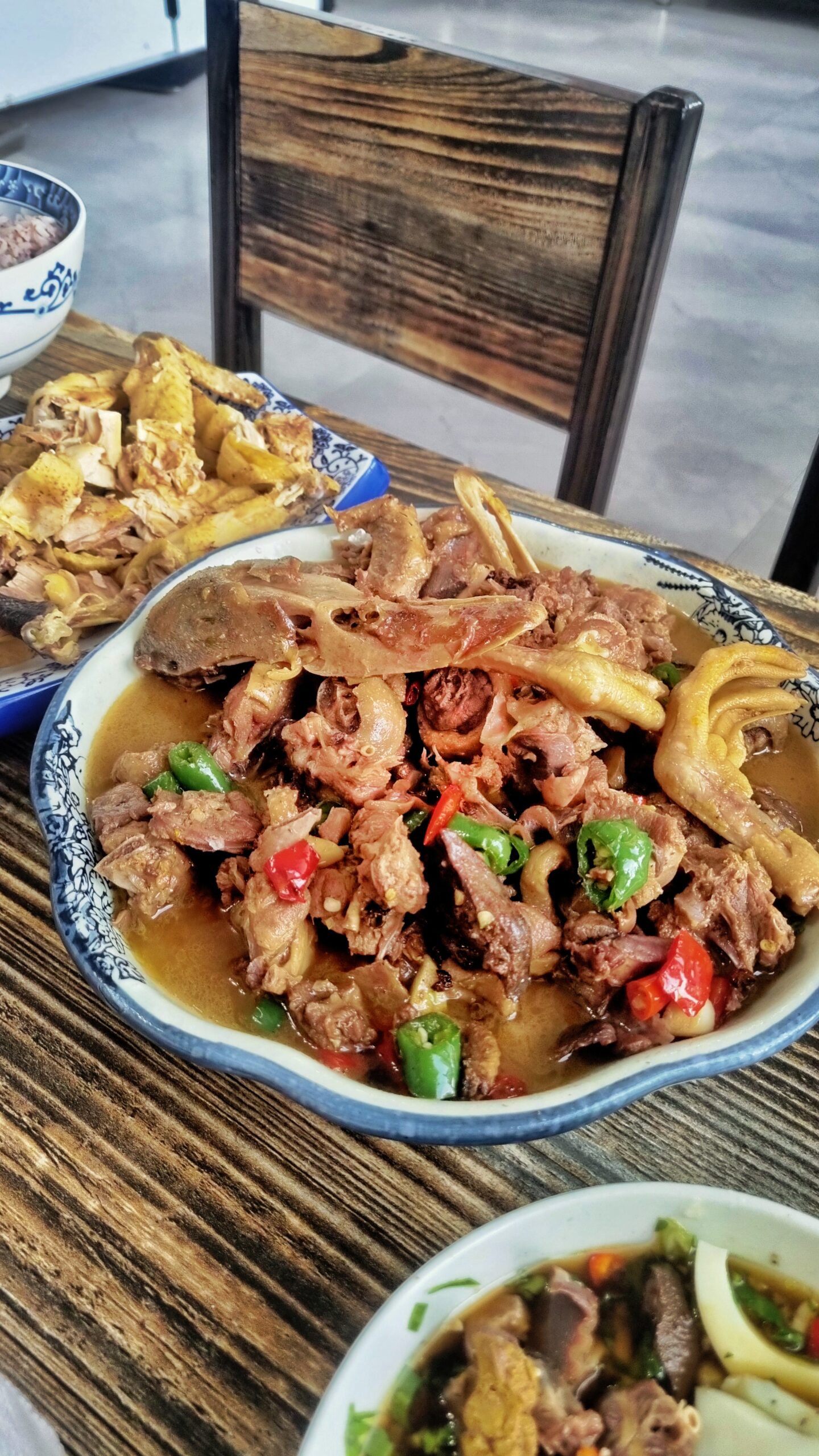
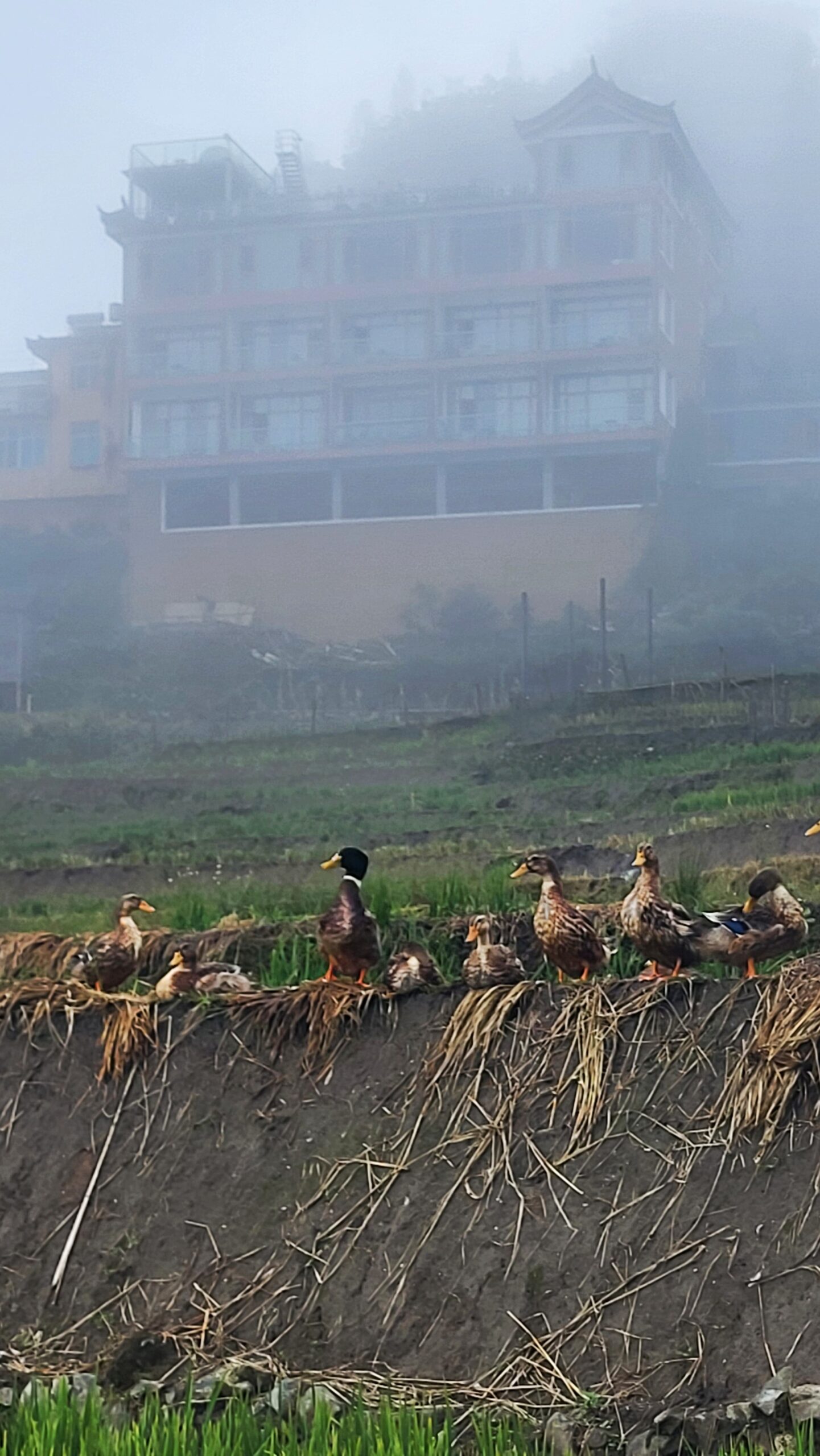
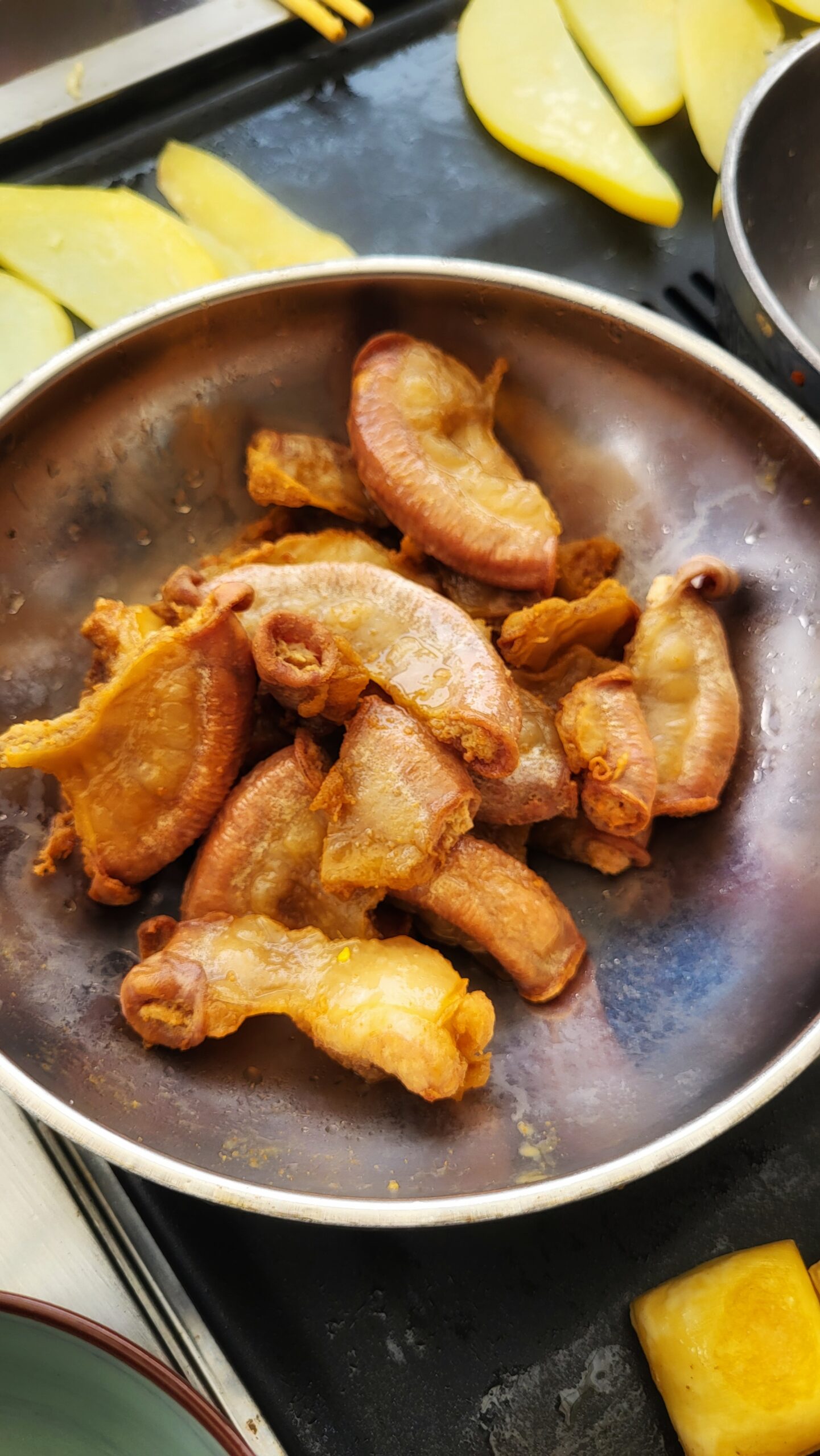
We’re the only guests in the house (about 15 rooms), and we haven’t seen a single western tourist here. At noon we order chicken and duck for dinner. When we show up in the evening, we’re stunned: almost a whole chicken and a whole small duck are waiting for us—head, feet, organs and all. Later we learn that they were “fetched from the rice fields” just for us. Oops.


Discofox dance for BBQ
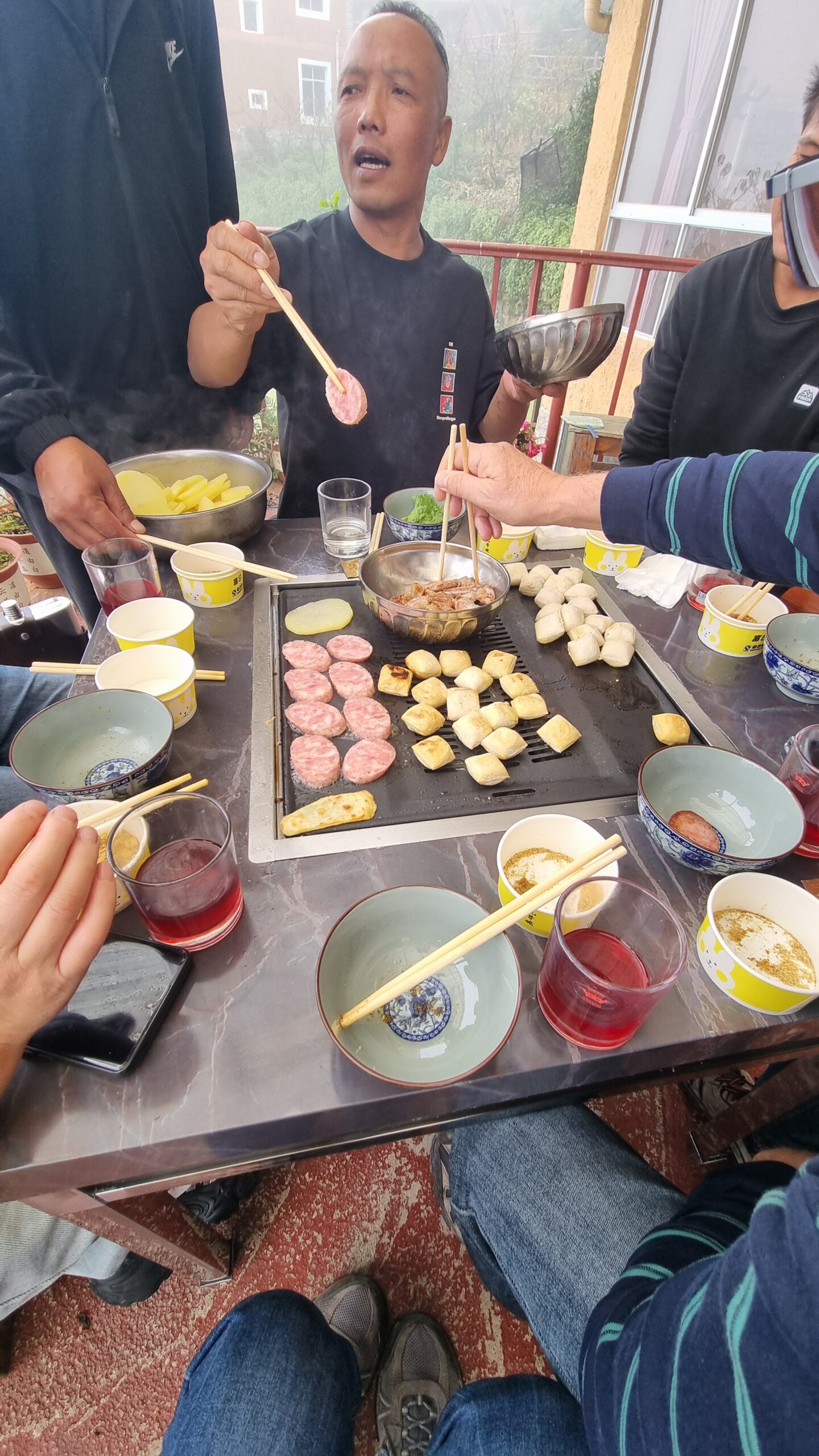
The owner, Wanya, has taken us into her heart and brings us to her neighbours. There’s a small lunchtime BBQ with a handful of people. They even sing a little song for us. In return, we dance a Discofox—immediately uploaded to TikTok by the host.
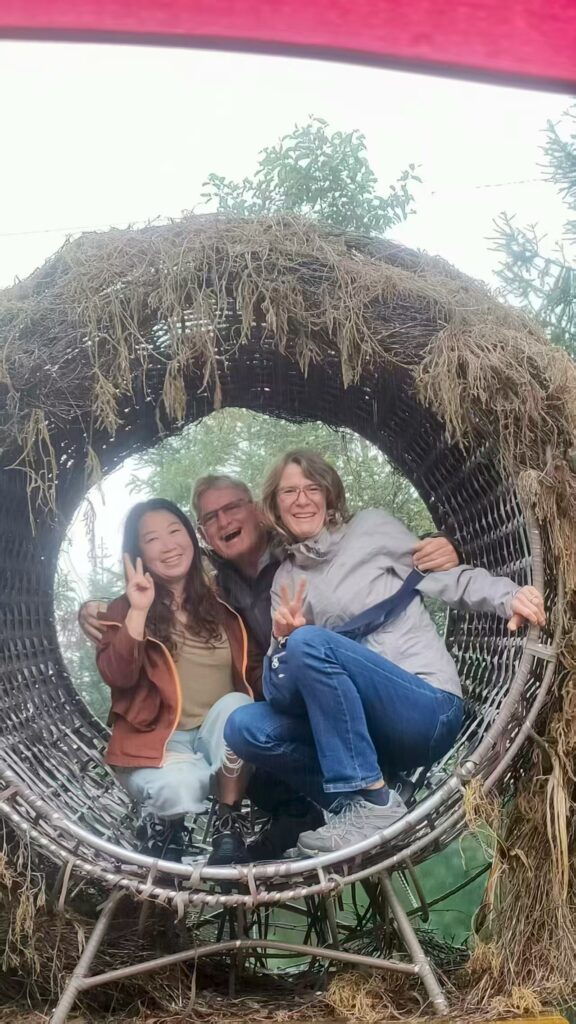

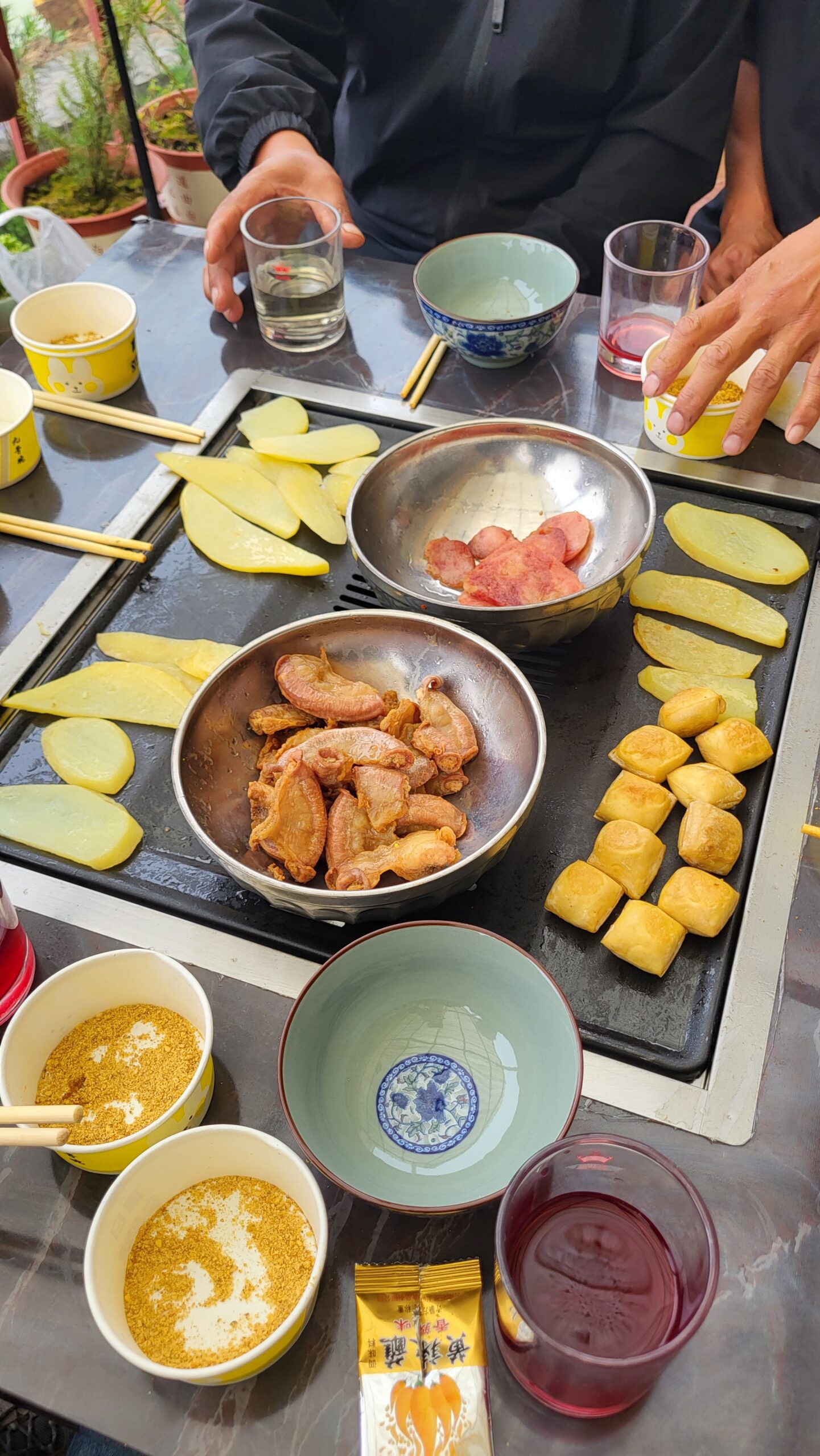
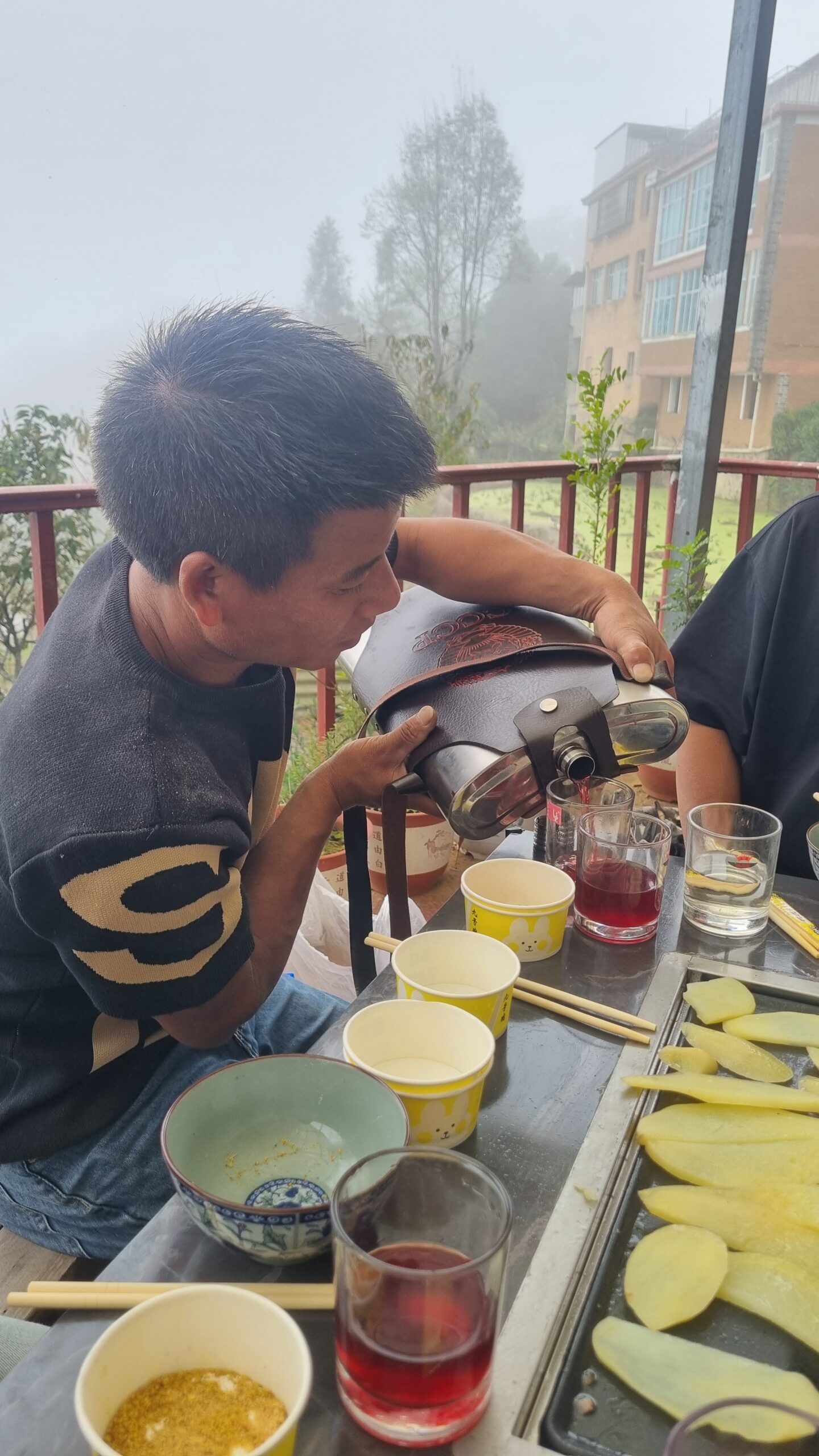

Within a few hours the video gets 34 likes, 34 hearts, and is shared 44 times. The whole village probably knows we’re here now.
A song for us
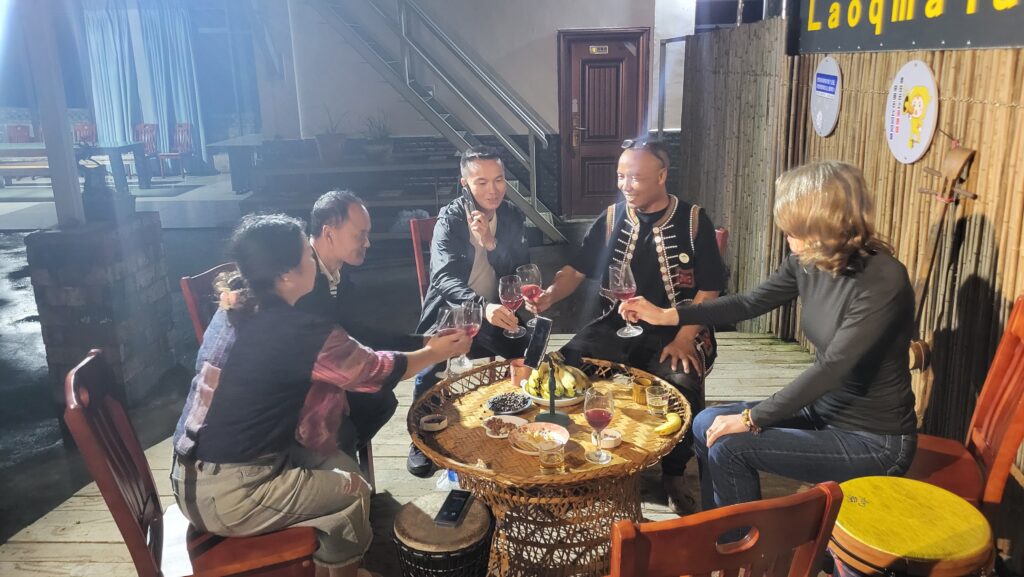
That same evening we’re invited to another village gathering—this time with about 30 guests. Again, they sing for us and treat us like honoured guests. Later some meet on the rooftop terrace to smoke, chill and drum together. With our translater small conversations are possible.

Dog
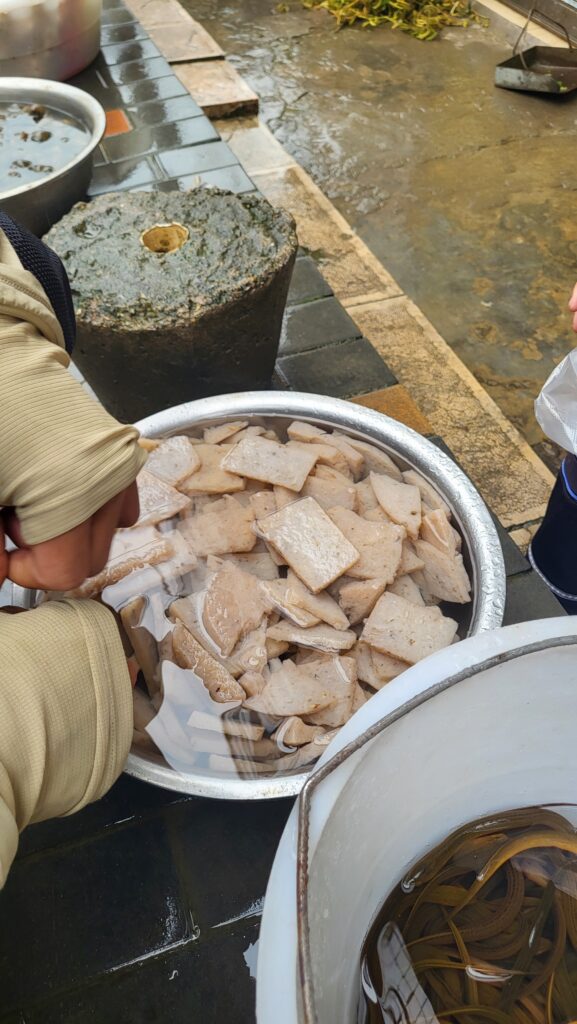
The next day we go to the market with Wanya. Besides vegetables there are live chickens, tofu, and lots of eels from the rice fields. And there we see “it” for the first time: in front of a meat stall, a big dog is being skinned.
Wanya says people don’t eat much dog anymore, and later we learn that slaughtering and eating dogs is officially banned. Still, it felt strange—and we didn’t dare take a photo (… and we checked the menus twice).

Shimmering rice terraces
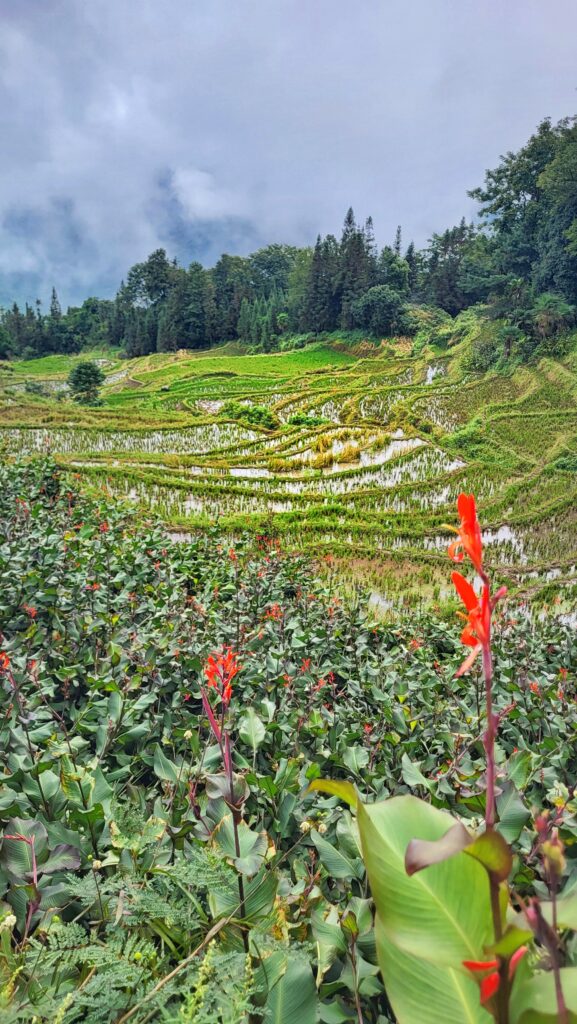
Depending on the season, the terraces look completely different and are a dream for photography—no Instagram filter needed. Honestly, you’d have to come four times a year to capture all the beautiful perspectives. We also got some photos from our hosts that we’d love to share with you..
I suppose hosting foreigners in the middle of nowhere on Chinese rice fields was a big attraction to the hosts and the whole village but for absolutely unique adventure. The hotel looks great and the view of the rice terraces spectacular. Thanks for sharing