A short bit of history. After Mao’s death in 1976, China was a poor agricultural country with a centrally planned economy and recurring famines. It could easily have become a second Cuba—if Deng Xiaoping hadn’t had the foresight to realize that only dynamic economic growth could prevent further hunger and, just as importantly, secure the Communist Party’s power.
Two photos taken 48 years apart show what once was—and what became possible through the reforms.

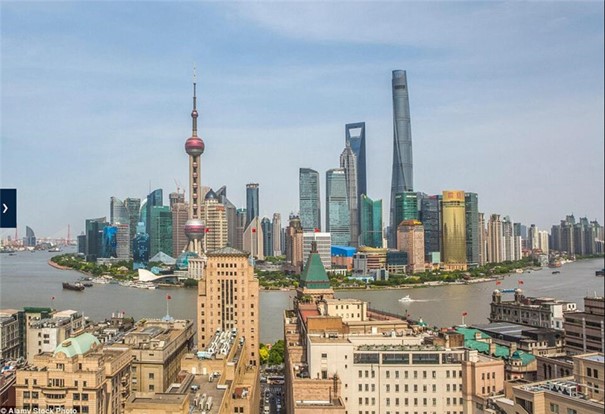
In December 1978, the Central Committee began a gradual move away from collective farming and introduced agricultural reforms. This development didn’t really fit communist ideology, but it clearly showed Deng Xiaoping’s pragmatism. He famously said:
“It doesn’t matter whether the cat is black or white, as long as it catches mice.”
What mattered wasn’t ideology, but results
Shenzhen
As part of these reforms, four Special Economic Zones (SEZs) were set up in 1979 as testing grounds. Shenzhen was one of them. With tax incentives, easier foreign direct investment, and extremely cheap labor, the foundation was laid for its transformation from a fishing village into a city of 17 million people. Today, Shenzhen is China’s “Silicon Valley,” home to global tech giants like Huawei, Tencent, ZTE, and DJI, and it operates one of the world’s largest container ports (28.77 million TEU).
For comparison: Hamburg handles about 7.7 million TEU, Valencia about 5.1 million TEU (Spain’s largest port).
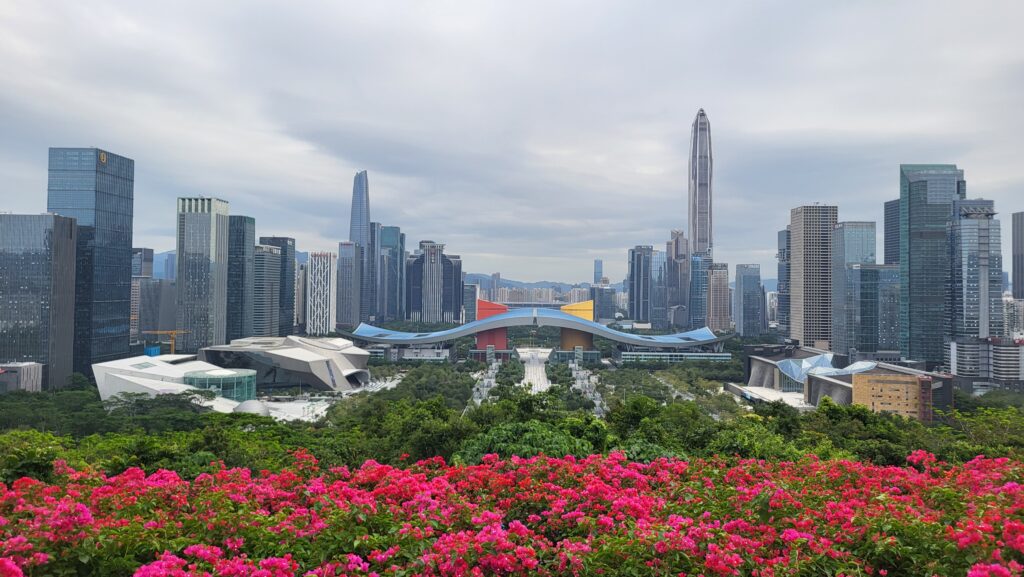
Reaching for the sky
Five of the world’s ten tallest skyscrapers are in China. The Ping An International Finance Center (平安金融中心) ranks fifth worldwide at 599.1 meters.

How much do people earn in China?
In China’s big cities, it often feels like people earn a lot of money. Walking through a downtown parking lot, you could almost think you’re in Europe.
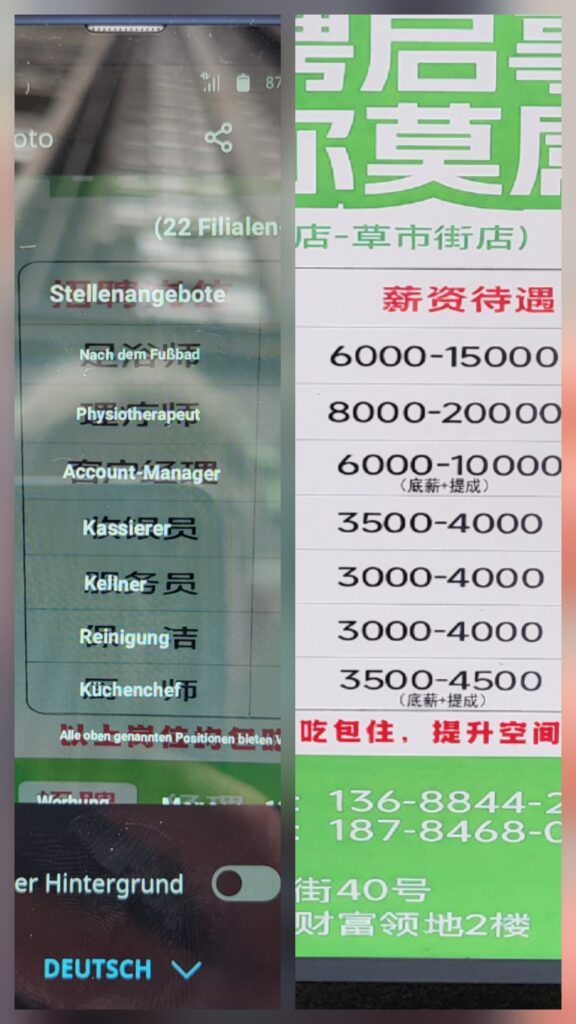
These are the “winners” of the economic boom—and there are many of them. China has the second-highest number of millionaires in the world. If you live in a major city and have a good job, life can be quite comfortable. We spot a headhunter’s sign in Chengdu (21 million inhabitants) showing typical salaries: simple jobs such as cashiers or waiters earn around €360–480 per month, while better-paid jobs (for example, physiotherapists) make about €960–2,400 per month. University graduates starting their first job usually earn around €800–1,200 per month.

For us, China feels like a cheap travel destination (hotels around €40/night, coffee €2–3, lunch €3, a 2-hour high-speed train ride €7). But considering the average income, many everyday items are actually quite expensive—almost luxury goods or even unaffordable for many locals.